Some of the most memorable moments in British broadcasting happen when nobody thinks the camera is still running. A hot mic. A live feed that wasn’t meant to go out. A studio that went quiet when it shouldn’t have. Those moments don’t disappear — they get replayed, dissected, remembered for years.
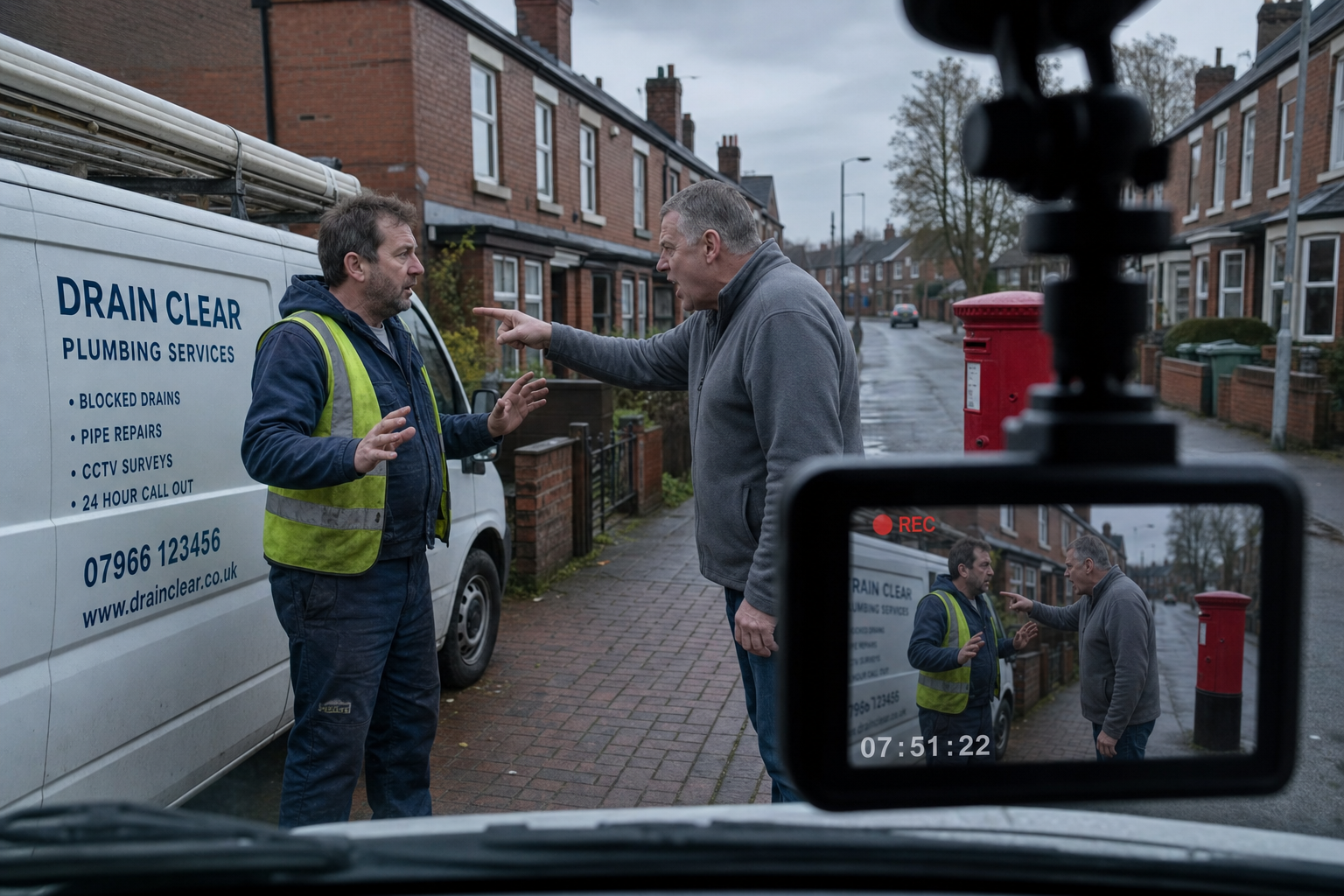
What happened on a residential street in Derby last March wasn’t broadcast on television. But it followed exactly the same logic: a camera that kept recording when everyone assumed it had stopped. And footage that changed everything once people saw it.
For weeks, Gary’s next-door neighbour had been parking across his driveway — sometimes blocking it completely, sometimes at an angle that made getting his work van out impossible without a seven-point turn. Gary is a self-employed plumber. Every delayed start costs him money. Every missed slot costs him a customer.
He’d knocked on the door. Left notes. Called the council. Called the non-emergency line twice. Nothing changed.
One morning, Gary knocked again. This time, the neighbour came out.
The Morning Everything Changed
Friends later told Gary they’d seen the neighbour get like this before — that people had tried to calm him down over the years and it never worked. That morning was no different. Gary stepped back. The neighbour followed. The argument escalated rapidly.
“The situation got out of hand very quickly. I stepped back, tried to de-escalate. I just didn’t know yet that every second of it was being recorded.”
What followed lasted four minutes and sixteen seconds. At some point during the confrontation, Gary’s van was struck — a panel dented, a wing mirror folded back hard. The damage was later quoted at £680. The neighbour denied it entirely. Gary called the police. When officers arrived, the neighbour gave his own version of events — one that placed the blame firmly on Gary. Without evidence, it would have been one man’s word against another’s.
The Camera Was Still On — Nobody Could Stop It
Gary had fitted a Nextbase 622GW three months earlier, after a wing mirror was clipped outside a job and the other driver denied all knowledge. He’d barely thought about the parking mode since setting it up. But the camera had been recording every one of those mornings — motion-triggered, G-sensor locked, running silently in the background. Neither man had any idea it was there.
When Gary unlocked his phone and opened the app, the clip was right there. Four minutes sixteen. 4K. Everything.
They Didn’t Know the Camera Was On
The officers reviewed the clip on Gary’s phone. The footage provided an unambiguous account of the incident — timing, sequence, context. Once the recording was presented, the dispute was resolved quickly. The van damage — £680 — was covered in full through the neighbour’s insurer. Gary’s no-claims record was unaffected.
“If I hadn’t had that camera, it’s my word against his — and we’d have been going back and forth for months. The footage resolved it the same morning. That’s what surprised me most.”
Gary’s situation is one many UK drivers will recognise: a dispute that escalates, a damage claim with no independent witness, and an insurer who can’t act without evidence. The dashcam’s parking mode addressed all three — recording continuously in the background, locking footage automatically when the vehicle was disturbed, and preserving everything in 4K clarity without either party knowing it was running.
Then the Clip Ended Up on Television
A few weeks after the incident was resolved, a producer at a regional current affairs programme contacted Gary. The footage — shared initially with his insurer and solicitor — had made its way into a segment on neighbour disputes and parking enforcement. Gary agreed to let them use it anonymously.
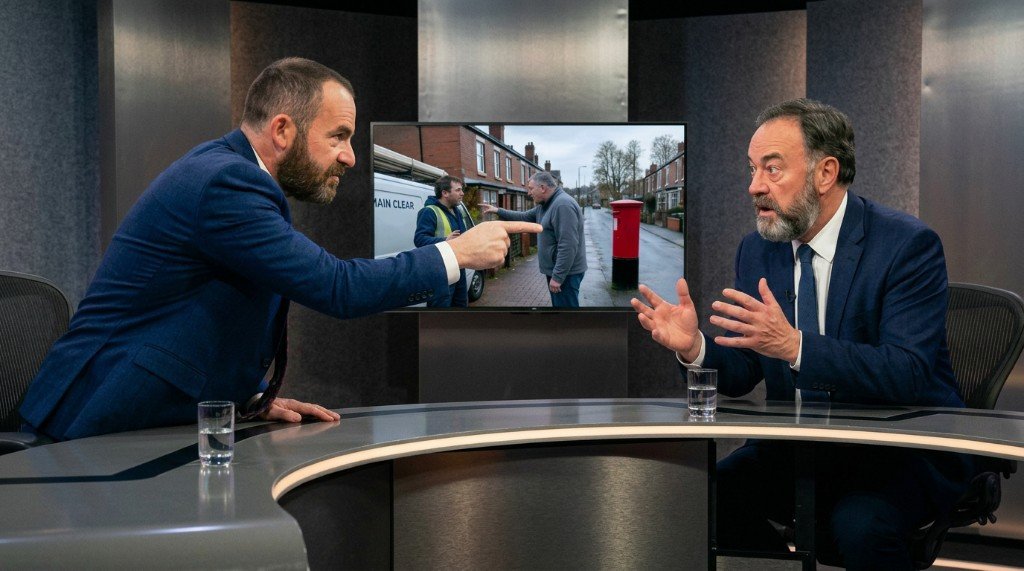
The clip played on screen while two presenters debated whether councils are doing enough to protect residents from persistent parking violations.
The conversation in the studio centred on one question: would Gary have had any recourse without the recording? Both presenters agreed the answer was no. One called it “the most clear-cut piece of evidence I’ve seen come out of a domestic dispute in years.”
Gary watched it at home with his wife. He said he felt mostly relieved — not vindicated, just glad it was over. The camera had done what he’d bought it for. He just hadn’t expected it to end up on the news.